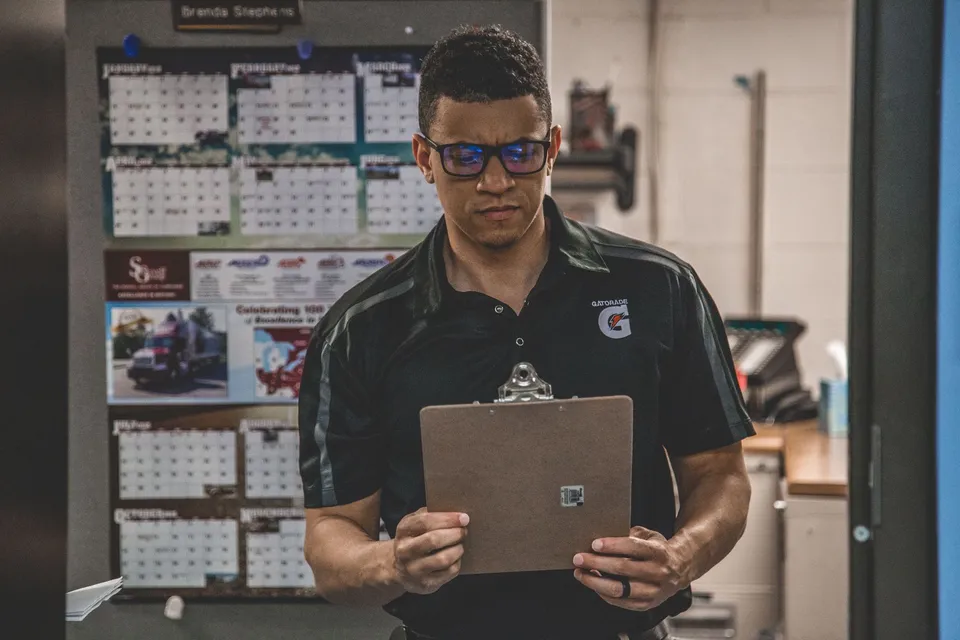
In northern Minnesota, a job described as “hands-on” is rarely only hands-on. In the Duluth metro, office and administrative support made up 10.7 percent of jobs in May 2025, and food preparation and serving made up 10.6 percent, which is a reminder that even a region with plenty of field work still runs on scheduling, records, and coordination as much as on physical labor. The same BLS report put Duluth’s mean hourly wage at $29.60, below the U.S. average of $33.54, so the label on the job does not tell the whole compensation story either.
The better question is: what does “hands-on” actually include? In many northern Minnesota workplaces, it means reading work orders, documenting completed tasks, using digital timekeeping or inventory systems, and communicating with the next shift. That shows up in production, maintenance, logistics, direct care, housekeeping, and supervision, not just in obvious trade jobs. The regional reporting notes that those are the skills that make a job staffable: not glamorous, but essential.
That matters because the region is not one uniform labor market. DEED’s Northeast analysis says the area’s unemployment rate has often run above Minnesota’s because leisure and hospitality, construction, and mining swing with seasons and outside markets. County profiles also show real differences in labor force participation: St. Louis County was at 61.2 percent in 2024, Itasca at 55.2 percent, Cass at 55.1 percent, Beltrami at 62.5 percent, Crow Wing at 59.6 percent, and Koochiching at 57.0 percent. An employer who says a role is “hands-on” in St. Louis County is drawing from a different local labor pool than one hiring in Cass or Itasca, and the recruiting approach should change with that reality.
The hidden half of the job
For applicants, this is the part worth sorting out before you accept. A “hands-on” job in northern Minnesota may still expect you to be comfortable with screens, forms, scanners, and shift notes. It may also mean that you need to be ready for site-specific rules, weather exposure, or physically repetitive work. Statewide occupation data show how wide the wage spread can be inside the trades alone: Minnesota’s construction and extraction occupations averaged $31.62 an hour in May 2023, but logging equipment operators were around $22.00 and first-line supervisors were $44.62. The title can sound similar while the daily work, pace, and pay are very different.
That wage spread is why employers should spell out the first-week reality instead of relying on a broad label. If the role needs daily paperwork, GPS or inventory tools, or a steady shift handoff, say so. If the work is seasonal, project-based, or heavily weather-dependent, say that too. The regional evidence points toward short-cycle, stackable training: safety basics, equipment familiarity, digital paperwork, customer communication, job-specific credentialing, then supervised progression. In a region with aging counties and thinner labor pools, cross-training is not a luxury; it is what keeps absences from turning into shutdowns.
Commute and housing change what “accessible” means
A job can be hands-on and still be hard to keep if the commute or housing math does not work. DEED county profiles show mean travel times to work of 19.9 minutes in St. Louis County, 21.0 in Beltrami, 23.1 in Crow Wing, and 24.1 in Itasca. HUD’s FY 2026 Fair Market Rent schedule puts the two-bedroom benchmark at $1,232 in the Duluth metro, $1,120 in Crow Wing, $1,074 in Itasca, $1,135 in Beltrami, $973 in Cass, and $973 in Koochiching. HUD also cautions that these are program benchmarks, not advertised rents or vacancy counts. Together, those numbers explain why a “good” job offer in northern Minnesota is often really a combined test of pay, fuel, car wear, and rent.
St. Louis County’s profile makes the budget pressure more concrete. It says 52.8 percent of renters and 22.6 percent of mortgaged homeowners spend 30 percent or more of household income on housing, and it estimates that a single adult needs $15.25 an hour to meet basic needs while a household with two adults and one child needs $19.91. That does not define every worker’s situation, but it does show why employers should separate base pay, overtime, shift differentials, and season length when they describe a role.
A better question to ask
Instead of asking only whether a job is hands-on, ask: what are the non-obvious tasks that go with the work? For employers, that means naming paperwork, schedules, handoffs, and training from the start. For applicants, that means asking whether the role is mostly physical, mostly administrative, or a true blend. In northern Minnesota, the best fit is often the job where the hidden half of the work matches what you can actually do every day.
If you are an employer, list the day-one tasks and the schedule realities before you post. If you are a job seeker, share your skills, availability, and preferred work style with Express at call Express, grandrapidsmn@expresspros.com, or apply@expressprosmn.com.